
Autocracy
Trump's Shared Hobby with Other Global Dictators
In the landscape of international relations, a discernible pattern has emerged in Donald Trump’s foreign policy approach: a consistent affinity for leaders who govern with a firm, often authoritarian, hand. This inclination has brought him into a circle of leaders from Russia, China, North Korea, Turkey, and Hungary, with whom he shares a publicly stated rapport. This dynamic, characterized by mutual praise and a transactional view of diplomacy, echoes historical alliances of convenience, such as that between Adolf Hitler and Benito Mussolini, where shared ideologies and a disdain for liberal democracy fostered a bond that reshaped the global order. The hobby, it appears, is autocracy—a pursuit with low personal cost for the leaders involved but a steep price for their citizens and the international community.
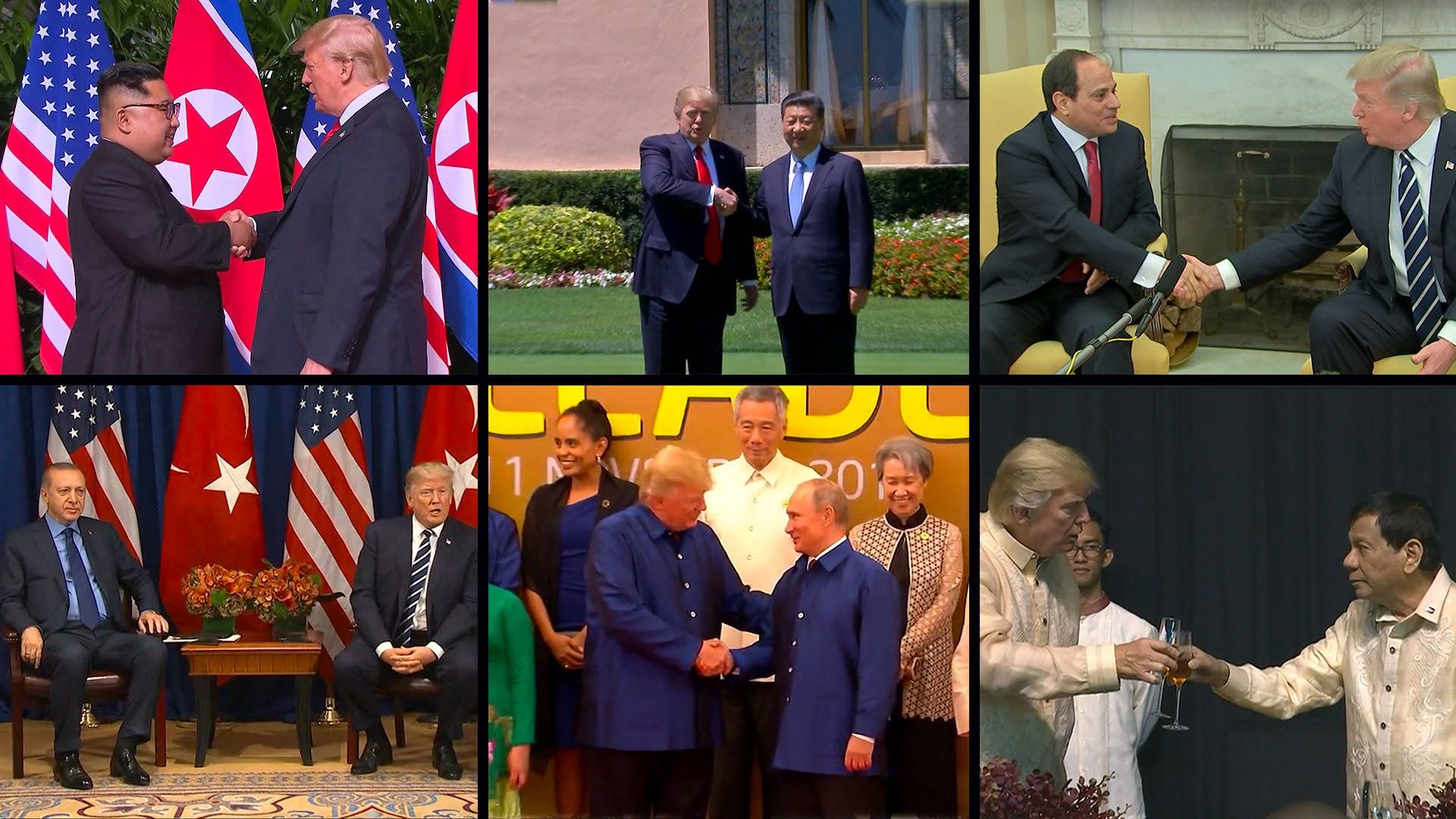
Recent statements from Trump have reaffirmed his admiration for these strongman figures. In October 2025, he endorsed Hungarian Prime Minister Viktor Orbán for the 2026 election, calling him “fantastic” and declaring that the US stands “100 per cent behind” him.[1] This followed a pattern of praise for Orbán’s leadership, which has been described as a model for “conservative governance” by some of Trump’s allies.[2] Similarly, Trump has continued to speak warmly of his relationship with North Korean leader Kim Jong Un, expressing a desire for another meeting in 2025 and referring to him as a “nuclear power.”[3][4] His rhetoric on Chinese President Xi Jinping remains one of respect, calling him a “very smart man” even amidst trade tensions.[5] With Turkish President Recep Tayyip Erdoğan, Trump has expressed confidence in his ability to resolve international conflicts, referring to him as a friend who is “respected in Russia.”[6][7] While expressing some disappointment with Vladimir Putin over the war in Ukraine in late 2025, Trump has also maintained that they “had a very good relationship, probably still do.”[8][9]
This camaraderie is not merely a matter of personal chemistry; it reflects a shared approach to governance that prioritizes executive power, nationalistic fervor, and a willingness to challenge established democratic norms.[10][11] For these leaders, the benefits of such a governing style are clear: the consolidation of power, the silencing of dissent, and the ability to act decisively without the constraints of legislative or judicial checks and balances.
The High Cost of a Shared Hobby
While the leaders themselves may find common ground and mutual benefit in their autocratic tendencies, the consequences for their own populations and the wider world are profound.
Russia: Under Vladimir Putin, Russia has seen a significant crackdown on human rights and political freedoms. Freedom of expression, assembly, and association are severely restricted, with dissenters facing arbitrary prosecutions and lengthy prison terms.[12][13] The Kremlin controls the courts, the legislature, and most of the media, creating a climate of fear and impunity for those in power.[7] On the international stage, Russia’s aggressive foreign policy, including its invasion of Ukraine, has destabilized the global order and led to widespread human suffering.[14]
China: The rule of Xi Jinping has been marked by an intensification of repression and social control.[8] In the Xinjiang region, the government’s policies against Uyghurs and other Turkic Muslims have been described as crimes against humanity.[8] Across the country, civil society has been stifled, and new laws have been implemented to legitimize political, religious, and ethnic repression.[5][6] China’s economic and technological assertiveness, including intellectual property theft, has also created significant friction in global trade.[11][15]
North Korea: As one of the most repressive countries in the world, North Korea under Kim Jong Un maintains control through fear, with widespread reports of arbitrary punishments, torture, executions, and forced labor.[1] Basic freedoms are virtually non-existent, and the population is subjected to a pervasive cult of personality.[16][17] The country’s continued development of its nuclear weapons and ballistic missile programs poses a significant and ongoing threat to regional and global stability.[18][19][20]
Turkey: Under Recep Tayyip Erdoğan, Turkey has experienced a dramatic erosion of its democratic institutions. A government crackdown following a failed coup attempt in 2016 has targeted all aspects of society, with tens of thousands of people arrested or dismissed from their jobs.[21][22] This has led to a sharp deterioration in civil liberties, with freedom of expression and peaceful assembly seriously curtailed.[23] Turkey’s assertive and often interventionist foreign policy has also created tensions with its neighbors and traditional allies.[24]
Hungary: Since Viktor Orbán came to power, Hungary has been described as a case of “democratic backsliding.” His government has systematically dismantled the country’s legal system, changed election laws to favor the ruling party, and cracked down on media freedom and civil society.[4] Orbán has openly declared his intention to create an “illiberal state,” and his actions have put Hungary at odds with the European Union over the rule of law.
A Historical Echo: The Pact of Steel
The affinity between these modern leaders bears a resemblance to the relationship between Adolf Hitler and Benito Mussolini. Their alliance, formalized in the “Pact of Steel,” was built on a foundation of shared fascist ideology, a desire to upend the existing world order, and a mutual disdain for liberal democracy.[5] While not a perfect analogy, the parallel lies in the way personal relationships between leaders with authoritarian leanings can translate into geopolitical alignments that challenge the foundations of the international system. Just as Hitler and Mussolini found common cause in their rejection of democratic norms, there is a “disturbing convergence and mutual sympathy between dictators and populists like Donald Trump.”
The Low Cost for the Powerful, The High Price for the People
For the leaders who engage in this brand of politics, the personal and political costs are often low. By controlling the media, suppressing dissent, and stoking nationalism, they can maintain a firm grip on power. The economic logic of autocracy can even be self-perpetuating, as leaders who produce poverty and misery through corruption often remain in power longer than those who foster prosperity.
However, for the citizens of these countries and the global community, the price is exceedingly high. The erosion of human rights, the stifling of innovation and free expression, and the constant threat of instability and conflict are the direct consequences of this shared “hobby.” The economic and social costs of autocracy are well-documented, with democracies consistently delivering better economic opportunities, health outcomes, and overall well-being for their people.
As these relationships of convenience continue to develop, the question for the rest of the world is how to respond. The challenge is to uphold democratic values and human rights while navigating a complex geopolitical landscape where a growing number of leaders seem to find more in common with each other than with the principles of a free and open international order. The stakes, as history has shown, could not be higher.
The People’s Response: A Call to Action
The concerns outlined are not merely theoretical; they are a driving force behind a burgeoning movement of citizen engagement. This sentiment will be on full display during the upcoming “No Kings 2” protests, a nationwide day of action scheduled for Saturday, October 18, 2025.[25][26][27] From major cities like Los Angeles to small towns across the country, thousands are expected to participate in these nonviolent demonstrations.[27][28][29]
Organized by a coalition of over 100 groups, including Indivisible and 50501, the “No Kings” movement is a direct response to what they describe as the Trump administration’s “authoritarian overreach” and a “creeping authoritarianism.”[28][30][31] The core message, “in America, we don’t do kings,” serves as a rallying cry against the very tendencies discussed in this article: the concentration of power, the disregard for democratic norms, and the embrace of a strongman style of leadership.[26][32][33]
The protests aim to create a massive, visible rejection of these trends.[32] Organizers in Los Angeles and elsewhere are calling for a broad-based, peaceful, and geographically dispersed mobilization of everyday Americans to show that the majority is taking action to stop what they see as a crisis of corruption and a power grab.[31][32] This is more than just a protest; it is framed as a necessary act of “civic resistance” against a perceived slide into autocracy.[34]
This movement represents a critical juncture. It is a real-world manifestation of the choice facing the American people: to passively accept the “hobby” of their leader and his autocratic counterparts or to actively engage in the defense of democratic principles. The “No Kings 2” protests, therefore, are not just a reaction to the present political climate but a proactive effort to shape the nation’s future, a grassroots call to action against the high cost of autocratic alliances.
References:
Hungarian Conservative. (2025, October 12). Trump endorses Viktor Orbán for 2026 election. https://www.hungarianconservative.com/articles/current/donald-trump-endorses-viktor-orban-2026-parliamentary-election-hungary/
Garamvolgyi, F., & May, M. (2024, November 2). Inside Hungarian Prime Minister Viktor Orbán’s not-so-secret mission to elect Trump. CBS News. https://www.cbsnews.com/news/viktor-orban-mission-to-elect-trump/
Serohina, K. (2025, August 26). Trump says he aims for meeting with Kim Jong Un in 2025. RBC-Ukraine. https://newsukraine.rbc.ua/news/trump-says-he-aims-for-meeting-with-kim-jong-1756162390.html
Ji, D. (2025, January 21). Trump calls Kim Jong-un ‘nuclear power,’ touts rapport. The Korea Herald. https://www.koreaherald.com/article/10403884
NDTV. (n.d.). Donald Trump praises Xi Jinping amid US-China trade war, tariffs: Very smart man. https://www.ndtv.com/world-news/donald-trump-praises-xi-jinping-amid-us-china-trade-war-tariffs-very-smart-man-8130228
Zamin.uz. (2025, October 14). Trump: Erdogan can resolve the Russia-Ukraine conflict. https://zamin.uz/en/world/163547-trump-erdogan-can-resolve-the-russia-ukraine-conflict.html
Anadolu Ajansi. (2025, October 14). Turkish President Erdogan can help end Russia-Ukraine war: Trump. https://www.aa.com.tr/en/americas/turkish-president-erdogan-can-help-end-russia-ukraine-war-trump/3716386
Radio Free Europe/Radio Liberty. (2025, October 15). Trump says he’s ‘very disappointed’ with Putin as he weighs providing Ukraine with Tomahawks. https://www.rferl.org/a/ukraine-russia-trump-zelenskyy-putin-tomahawks-kupyansk-bessent-svyrydenko/33560229.html
Madhani, A., & Kim, S. M. (2025, October 16). Trump speaks with Putin as he considers selling Ukraine long-range missiles. Global News. https://globalnews.ca/news/11480776/ukraine-trump-putin-zeleneskyy-tomahawk-missiles/
Wikipedia contributors. (2025, October 16). Donald Trump and fascism. Wikipedia. https://en.wikipedia.org/wiki/Donald_Trump_and_fascism
Protect Democracy. (2025). The authoritarian playbook for 2025.
https://www.authoritarianplaybook2025.org/
Quartz. (n.d.). Stocks surge after Trump softens trade tone on China. https://qz.com/trump-china-trade-tariffs-stocks
Al Jazeera. (2025, June 12). Trump open to dialogue with North Korea’s Kim Jong Un, White House says. https://www.aljazeera.com/news/2025/6/12/trump-open-to-dialogue-with-north-koreas-kim-jong-un-white-house-says
PBS News. (2025). WATCH: Bessent says Trump still expects to meet Chinese leader as trade tensions increase. https://www.pbs.org/newshour/politics/watch-bessent-says-trump-still-expects-to-meet-chinese-leader-as-trade-tensions-increase
Bloomberg Tax. (2025). Hungary’s Orban to meet Trump, discuss “economic package”. https://news.bloombergtax.com/daily-tax-report-international/hungarys-orban-to-meet-trump-discuss-economic-package
Livemint. (2025). Sign of thaw? Trump remarks ‘not saying he is wrong’ on Xi Jinping amid escalating US-China trade tensions. https://www.livemint.com/news/us-news/us-china-trade-tensions-thaw-donald-trump-not-saying-xi-jinping-not-wrong-tough-response-100-pc-us-tariffs-chinese-goods-11760324656490.html
Fox Business. (2025). Trump says ‘don’t worry about China’ amid trade dispute. https://www.foxbusiness.com/economy/trump-says-dont-worry-about-china-after-beijing-responds-100-tariff-threat
Hungarian Conservative. (2025, October 10). Orbán to meet Trump soon, calls Hungary a pillar of peace. https://www.hungarianconservative.com/articles/current/orban-trump-to-meet-peace-ceasefire-politics/
The Washington Post. (2025, October 16). Trump speaks with Putin as he considers Ukraine’s push for long-range missiles. https://www.washingtonpost.com/politics/2025/10/16/trump-zelenskyy-putin-russia-ukraine/1e506f22-aa45-11f0-a2bc-82cf6840599d_story.html
TIME. (2025). What Trump’s Gaza ceasefire speech tells us about Ukraine. https://time.com/7325711/trumps-gaza-ceasefire-speech-ukraine/
The Independent. (2025). Ukraine-Russia war latest: Trump posts about ‘lengthy’ conversation with Putin on Truth Social while on phone call. https://www.independent.co.uk/news/world/europe/ukraine-russia-war-trump-putin-zelensky-meeting-latest-news-b2846705.html
Arms Control Association. (2025, May). Trump says U.S. is communicating with North Korea. https://www.armscontrol.org/act/2025-05/news/trump-says-us-communicating-north-korea
Yahoo News. (2025). ‘I am speaking to President Putin now,’ Trump says. https://ca.news.yahoo.com/am-speaking-president-putin-now-154531524.html
Anadolu Ajansi. (2025, October 14). Trump praises Türkiye’s role in Gaza ceasefire, says President Erdogan ‘helped a lot’. https://www.aa.com.tr/en/middle-east/trump-praises-turkiye-s-role-in-gaza-ceasefire-says-president-erdogan-helped-a-lot-/3715351
World Socialist Web Site. (2025, October 16). No Kings, No Nazi Führers! Mobilize the working class against Trump’s dictatorship!. https://www.wsws.org/en/articles/2025/10/16/sobd-o16.html
Athol Daily News. (2025, October 16). Nationwide rallies return: No Kings Day II events planned in Greenfield, Orange and Ashfield. https://atholdailynews.com/2025/10/16/no-kings-day-protests-greenfield/
People’s World. (2025). No Kings Day protests October 18 to sweep the globe. https://peoplesworld.org/article/no-kings-day-protests-october-18-to-sweep-the-globe/
The Guardian. (2025, June 14). Millions across US turn out for ‘No Kings’ protests against Donald Trump. https://www.theguardian.com/us-news/2025/jun/14/no-kings-protests-trump-military-parade
Denverite. (2025, October 14). No Kings protests return to Denver and other Colorado cities on Saturday. https://denverite.com/2025/10/14/no-kings-protest-denver/
The Santa Barbara Independent. (2025, October 13). Indivisible Santa Barbara to join nationwide ‘No Kings’ protest on October 18. https://www.independent.com/2025/10/13/indivisible-santa-barbara-to-join-nationwide-no-kings-protest-on-october-18/
United University Professions. (2025). Save the date: No Kings 2 is Oct. 18. https://uupinfo.org/communications/uupdate/250922.php
No Kings. (2025). THE OFFICIAL NO KINGS RALLY Colorado Springs. https://www.mobilize.us/nokings/event/849189/
FOX 9 Minneapolis-St. Paul. (2025). What to know about the ‘No Kings’ protests set for this weekend. https://www.fox9.com/news/what-know-about-no-kings-protests
Whole Community News. (2025, October 12). No Kings asks protesters to move into civic resistance. https://wholecommunity.news/2025/10/12/no-kings-asks-protesters-to-move-into-civic-resistance/