
Big, Beautiful Boycotts
Your Wallet is Your Voice: A Guide to Conscious Consumerism
In a world where corporations have immense influence, it’s easy to feel powerless. But the truth is, we have a powerful tool at our disposal: our purchasing power. Every dollar we spend is a vote for the kind of world we want to live in. When we support companies that align with our values, we help build a more just, sustainable, and equitable future. Conversely, when we patronize businesses with questionable practices, we inadvertently fund the very issues we oppose.
This guide is a starting point for those who want to make more informed and intentional choices. It highlights some of the companies that have faced calls for boycotts due to their alleged involvement in a range of concerning issues. We encourage you to do your own research and decide for yourself which companies you wish to support.
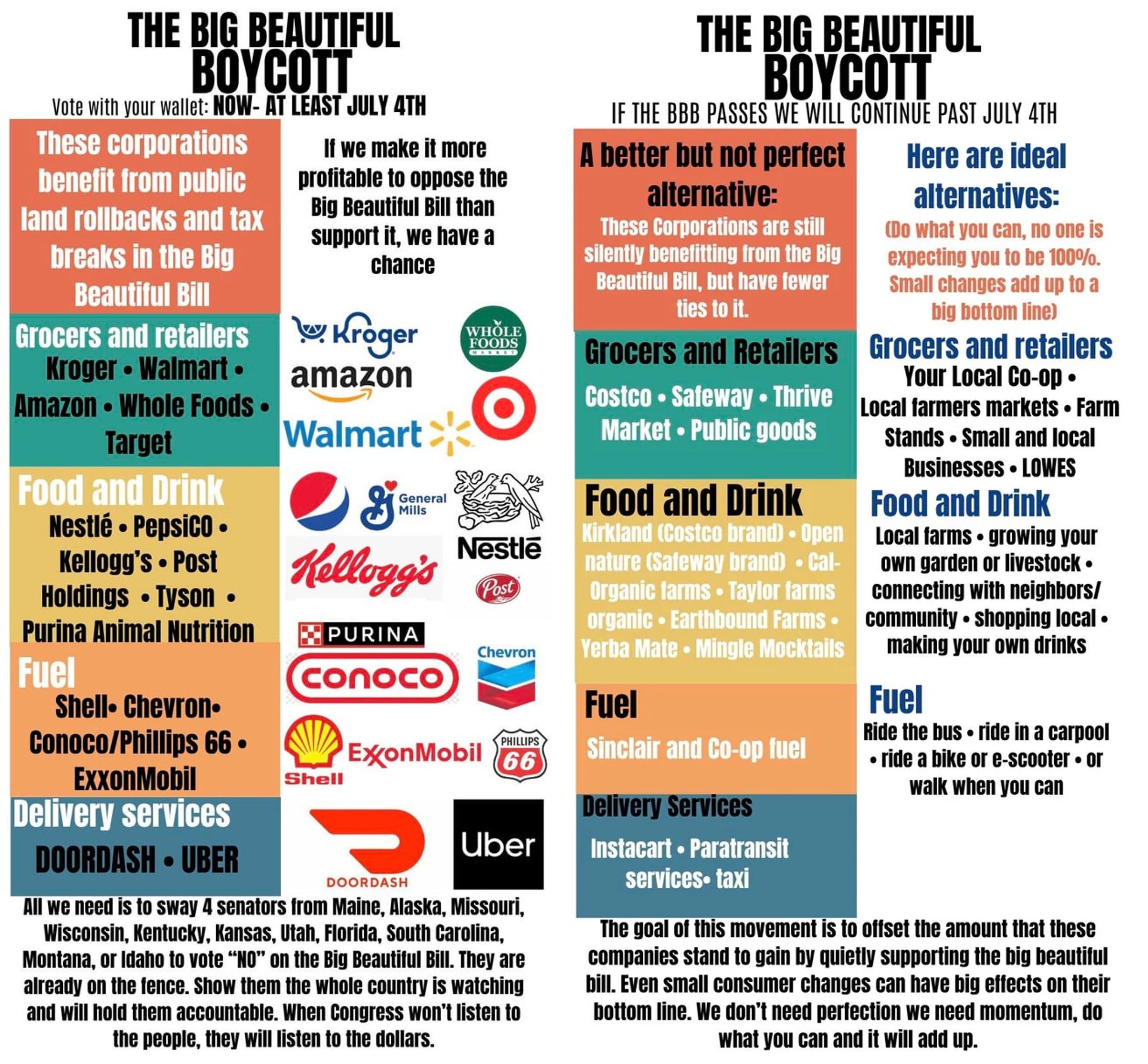
Priority Boycotts: Where to Start
If you’re looking to make a significant impact, consider starting with these companies. They have been the subject of widespread criticism for their alleged environmental, social, and political stances.
Amazon: Concerns have been raised about Amazon’s treatment of its warehouse workers, its environmental footprint, and its partnerships with law enforcement and government agencies.
Walmart: This retail giant has faced scrutiny for its labor practices, including low wages and anti-union stance, as well as its impact on small businesses.
Home Depot: The company has been criticized for its co-founder’s significant financial support of political candidates with controversial policies.
Starbucks: The coffee chain has been the target of boycotts related to its alleged anti-union activities and its stance on international conflicts.
Paramount Plus (CBS/Viacom): Media conglomerates like Paramount have been criticized for their political affiliations and the content they produce.
Major Oil Companies (Exxon, Chevron, BP, ARCO/AM/PM): The fossil fuel industry is a primary driver of climate change, and these companies have been accused of lobbying against environmental regulations and spreading misinformation.
Target: The retailer has faced boycotts from different groups over its product choices and social stances.
Spotify: This streaming service has been at the center of controversies regarding artist compensation and the spread of misinformation on its platform.
Expanding Your Impact: Other Companies to Consider
Once you’ve made changes in your spending with the companies above, you might want to look at others that have also faced criticism.
Ride-sharing and Food Delivery (Uber, Lime): These companies have been criticized for their labor practices and their impact on traffic congestion and the environment.
Entertainment Giants (Disney, including Hulu): Disney has been involved in various political and social controversies, and its dominance in the entertainment industry has raised concerns about media consolidation.
Tech and Finance (Tesla, PayPal): These companies have faced scrutiny over their labor practices, environmental impact, and the actions of their leadership.
Fast Food and Beverage (Chick-fil-A, McDonald’s, Coca-Cola, Domino’s, Frito-Lay): These brands have been criticized for their environmental impact, labor practices, and the health implications of their products.
Big Tech (Meta/Facebook/Instagram, Google, Apple, Microsoft, Twitter/X, TikTok): These platforms have faced a barrage of criticism over data privacy, censorship, the spread of misinformation, and their impact on mental health.
Financial Institutions (Chase, Wells Fargo): Major banks have been criticized for their investments in fossil fuels and other controversial industries.
The Power of Positive Change: Ethical Alternatives
Boycotting is only half the battle. The other half is actively supporting businesses that are making a positive impact. Here are some alternatives to consider:
For Streaming Services:
Kanopy and Hoopla: These services, often available for free through your local library, offer a vast collection of films, documentaries, and TV shows.
Criterion Channel: A curated selection of classic and contemporary films from around the world.
Local and Independent Cinemas: Support your local movie theater to help keep independent film alive.
For Social Media:
Alternative Platforms: Explore emerging social media platforms that prioritize user privacy and a more positive online environment.
For Email:
ProtonMail: A secure and encrypted email service that protects your privacy.
For Music:
Bandcamp: A platform that allows you to directly support artists by purchasing their music and merchandise.
Local Radio: Tune in to and support your local independent radio stations.
For Everyday Shopping:
Local and Independent Stores: Whenever possible, shop at small, locally-owned businesses in your community.
Farmer’s Markets: Support local farmers and get fresh, seasonal produce.
Ethical and Sustainable Brands: Look for companies that are transparent about their supply chains and committed to ethical and sustainable practices.
For Banking:
Credit Unions: As non-profit organizations, credit unions often offer better rates and are more invested in their local communities.
Ethical Banks: Look for banks that are certified B-Corps, which means they meet high standards of social and environmental performance.
The journey to conscious consumerism is a marathon, not a sprint. It’s about making small, sustainable changes that, when multiplied by millions of people, can create a ripple effect of positive change. The power is in our hands to shape a better future, one purchase at a time.