
Muscular Constitutionalism
A Strategic Blueprint for the No Kings 3 Era
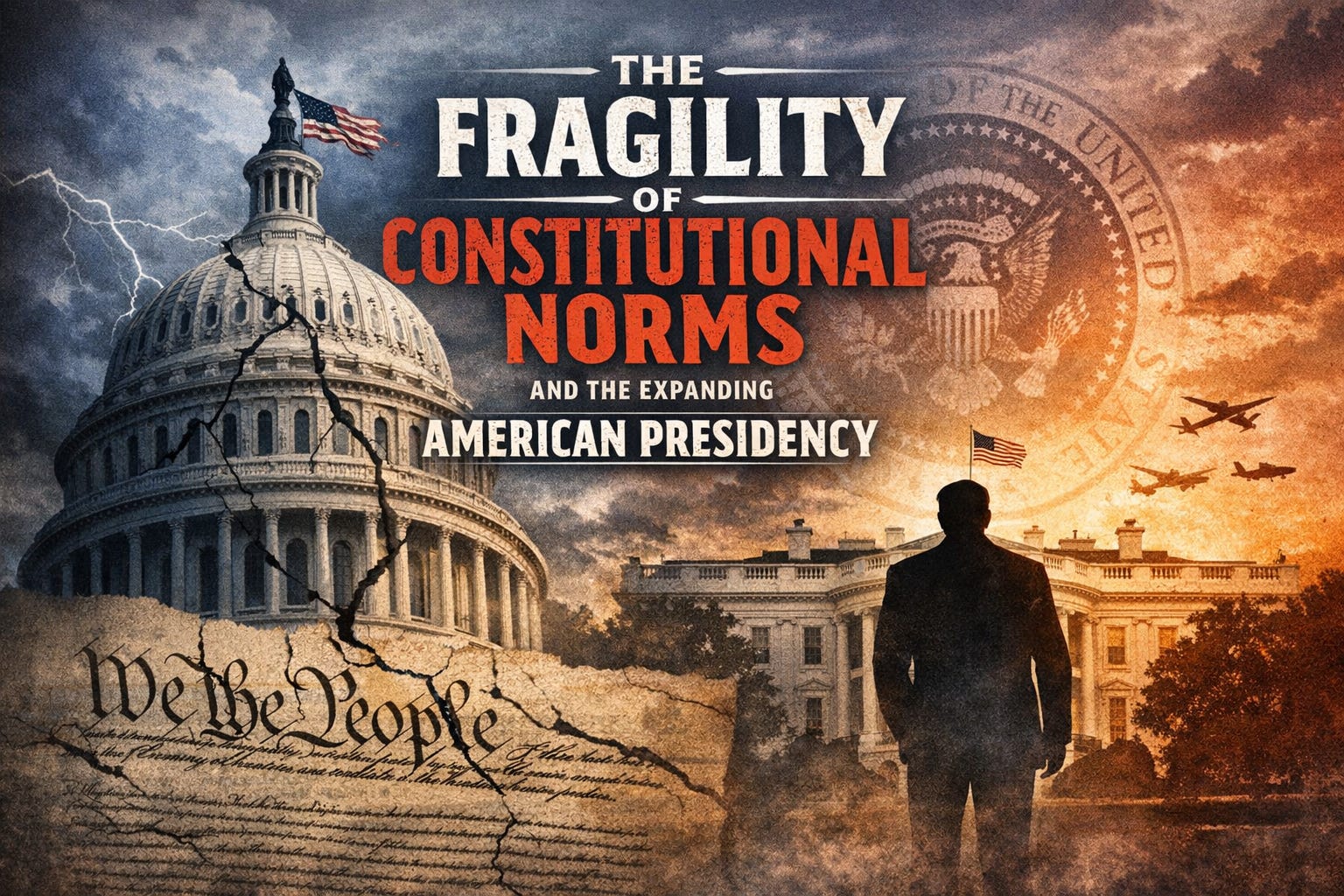
Over the past several years, Americans have watched something extraordinary—and unsettling—unfold in real time. The constitutional system that many assumed was self‑correcting has shown signs of strain under pressures it was never designed to withstand: hyper‑polarization, digital‑age disinformation, the expansion of emergency powers, and the steady erosion of the informal norms that once constrained presidential behavior.
A new white paper, “The Fragility of Constitutional Norms and the Expanding American Presidency,” takes a comprehensive look at how we arrived at this moment and what it will take to navigate the years ahead.
👉 View a video preview of the white paper here:
This is not a short essay or a quick take. It is a 26‑page, deeply researched analysis that traces the evolution of executive power from 1789 to 2026, drawing on constitutional theory, comparative political systems, historical case studies, and the psychology of institutional failure. It is written for readers who want more than headlines—readers who want to understand the structural forces shaping the American republic at a moment of profound uncertainty.
Why This Paper, and Why Now
The modern presidency is more powerful than at any point in American history. That power has accumulated gradually—through wars, crises, congressional inaction, judicial deference, and the rise of the unitary executive theory. But the guardrails that once kept the office in balance have weakened dramatically.
As the paper notes:
“A constitutional system that depends on good faith cannot survive bad‑faith actors indefinitely.”
The United States has reached a point where the system’s resilience can no longer be taken for granted. The question is no longer whether the presidency has expanded—it has—but whether the constitutional architecture built in the 18th century can withstand the political, technological, and institutional realities of the 21st.
What the White Paper Covers
The analysis is organized into fourteen parts, including:
• A historical timeline of norm erosion (1789–2026)
How executive power expanded across the Founding era, the Civil War, the New Deal, the Cold War, Watergate, 9/11, and the digital age.
• The legal and structural vulnerabilities of emergency powers
Including the National Emergencies Act, IEEPA, the Insurrection Act, and the modern national security state.
• Case studies: Watergate, Iran‑Contra, and the post‑9/11 era
What these crises reveal about institutional failure—and why some produced reform while others entrenched new powers.
• Comparative constitutional analysis
How peer democracies like Germany, Canada, and the UK prevent executive overreach through mechanisms the U.S. lacks.
• The psychology of institutional failure
Why individuals inside government often comply rather than resist, even when norms are breaking.
• The role of the public
How civic disengagement, misinformation, and declining trust weaken democratic resilience.
• The current dilemma
Why the system’s self‑correcting mechanisms are faltering—and what that means for the near future.
• A reform blueprint
Concrete proposals to strengthen legal guardrails, oversight, civil service protections, emergency powers, and democratic norms.
Who This Paper Is For
This white paper is written for:
policymakers and staffers
journalists and analysts
scholars of constitutional law and political science
civic leaders and organizers
anyone trying to understand why the system feels unstable—and what can be done about it
It is not partisan. It is structural. The goal is to illuminate vulnerabilities that exist regardless of who occupies the Oval Office.
Why It Matters
The American constitutional system has always been a gamble. It assumes that ambition will counteract ambition, that institutions will defend their prerogatives, and that leaders will internalize constitutional norms. But as the paper argues, those assumptions are no longer reliable.
“Norms erode gradually, then collapse suddenly. Once broken, they are difficult to restore.”
If the United States is to remain a stable constitutional democracy, it must confront these vulnerabilities directly—and with urgency.
Read the Full White Paper
If you want the deeper analysis, the historical context, the comparative insights, and the reform roadmap, you can read the full white paper here:
👉 https://drive.proton.me/urls/YW25F9VREC#dtmQ5Zg6VPbs
I hope this work contributes meaningfully to the ongoing conversation about how to preserve and strengthen the American republic at a moment when its foundational assumptions are being tested.
If you find it valuable, please share it widely.